Namdapha is one of very few places in the world where four big cats have been recorded in the same park: the tiger, leopard, clouded leopard and snow leopard, thanks to its range from lowland forest to alpine ridges.
Source: Namdapha National Park
Himalaya only · Saver trips from ₹7,500
Try "Spiti", "snow leopard", "Char Dham", "homestay", "Tiger's Nest"
National park in Arunachal
Lowland rainforest on the Noa-Dihing, beyond Miao
Namdapha National Park in Changlang district protects about 1,985 sq km of forest rising from about 200 m to over 4,500 m on the Myanmar border. Base yourself at Miao or the forest rest house at Deban on the Noa-Dihing. Come November to March for birds, gibbons and dry trails; stay 3–4 nights.
 Photo: Rohit Naniwadekar · CC BY-SA 4.0 · Commons
Namdapha is one of the largest protected areas in India and one of the least visited. Declared a national park and tiger reserve in 1983, it climbs from lowland evergreen rainforest along the Noa-Dihing river to temperate forest and snow on the Dapha Bum ridge. That range of altitude explains its reputation: tigers, leopards, clouded leopards and snow leopards have all been recorded inside one park.
For visitors, Namdapha means the lower forest. The town of Miao, on the Noa-Dihing at the park's western edge, has the field director's office, a small museum and simple hotels. From Miao a rough road runs about 25 km to Deban, where the forest rest house looks across the river into the park. From Deban, guided treks lead deeper to camps such as Haldibari and Firmbase.
This is not a safari park. There are no open jeep drives and big cats are almost never seen. What you get is real rainforest: hoolock gibbons calling at dawn, hornbills crossing the river, giant trees, leeches after rain and a silence broken only by birds. Come prepared to walk, accept simple rooms and food, and give it at least three nights.
The forest rest house at Deban stands above the river where the park begins. Mornings bring mist on the water, hornbills crossing and gibbons calling from the far bank. Most walks start with a river crossing here.
Namdapha is one of the best places in India to hear hoolock gibbons, India's only ape. Families call to each other across the canopy at first light, and patient walkers sometimes see them moving through the treetops.
Hornbills, babblers, laughingthrushes, broadbills and wren-babblers make Namdapha a serious birding site. A local bird guide helps enormously, since the forest is dense and many species are heard before they are seen.
Guided treks from Deban follow forest trails to camps at Haldibari and Firmbase, with river crossings, giant trees and nights in simple camps. They need permits, a guide and porters, and suit fit, prepared walkers.
The Second World War road from Ledo towards Burma passes through Jairampur and Nampong, south of Miao. A war cemetery near Jairampur and the Pangsau Pass on the border tell that history; access rules vary.
Miao has a Tibetan settlement known for carpets, and the park's small museum near the field director's office. Both fill a spare afternoon before or after Deban.
Field notes
Namdapha is one of very few places in the world where four big cats have been recorded in the same park: the tiger, leopard, clouded leopard and snow leopard, thanks to its range from lowland forest to alpine ridges.
Source: Namdapha National Park
The Namdapha flying squirrel is known to science from a single specimen collected in the park in 1981. It has not been confirmed since and is listed as critically endangered.
Source: Namdapha flying squirrel
The Ledo Road, later renamed the Stilwell Road, was built by Allied forces in the Second World War to link Ledo in Assam with the Burma Road to China. Its route crosses Arunachal through Jairampur and Nampong to the Pangsau Pass.
Source: Ledo Road
Experiences
 Photo: Programme HURO · CC BY-SA 3.0 · Commons
Wake at Deban before sunrise, cross the Noa-Dihing with a forest guide and walk into the rainforest to hear and look fo…
 Photo: Mathias Appel · CC0 · Commons
Walk from Deban into the heart of Namdapha with a forest guide and porters, camping at Haldibari and Firmbase among gia…
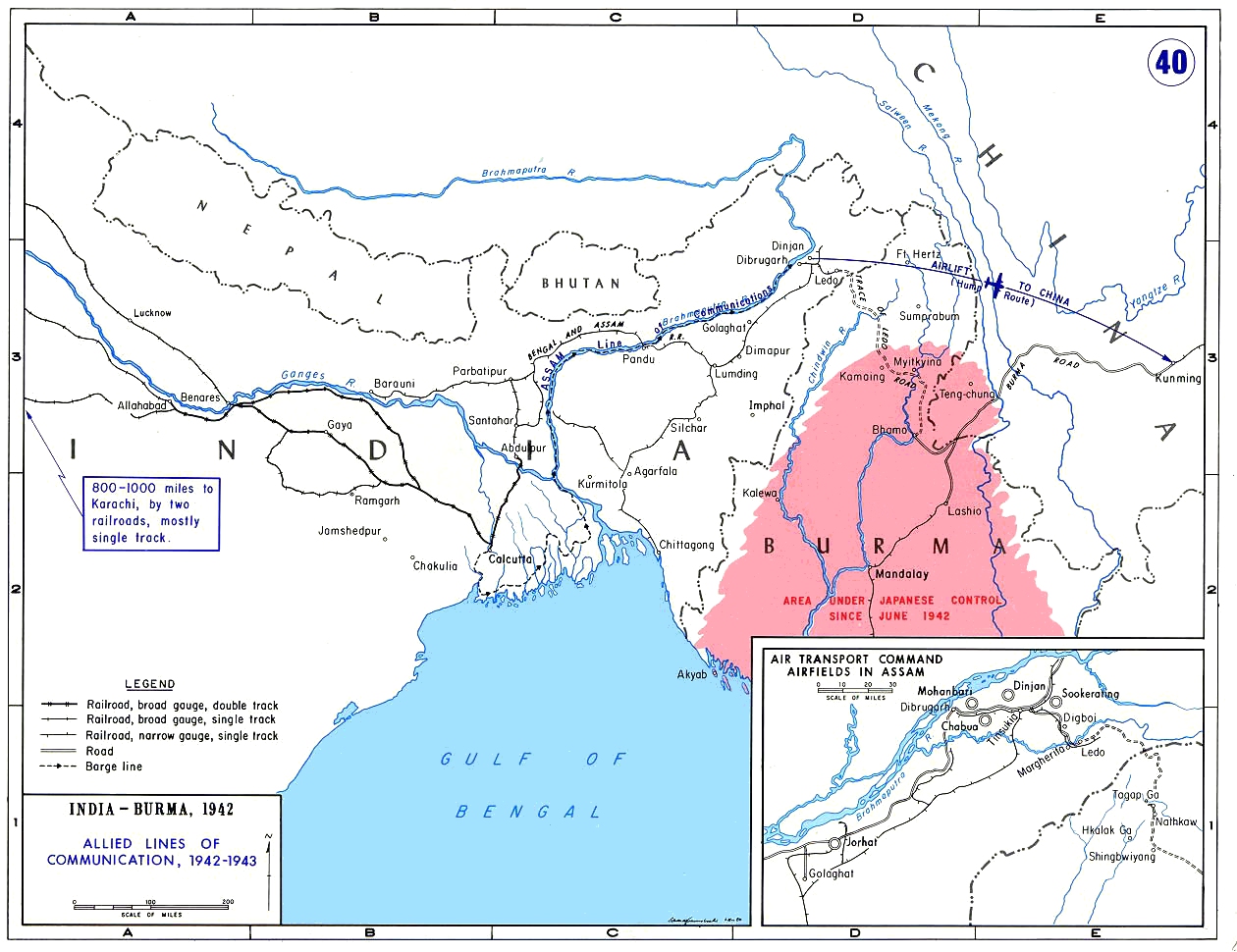 Photo: The Department of History, United States Milit… · Public domain · Commons
Follow the Second World War road from Ledo towards Burma through Jairampur and Nampong, stopping at the war cemetery ne…
Real prices
Local prices change with season and fuel costs. Check current status before you travel.
Getting there
Air
Dibrugarh airport, with flights from Delhi, Kolkata and Guwahati, is the usual gateway. From there it is about 170 km and 5–6 hours to Miao through Tinsukia, Margherita and Jagun, then another hour on a rough road to Deban.
Bus
Shared Sumos and buses run from Tinsukia and Dibrugarh to Miao, mostly in the morning. Tinsukia and Margherita have the nearest useful rail connections. From Miao to Deban you need a hired jeep arranged locally or through the forest department.
Road
The road crosses into Arunachal near Jagun, where permits are checked, then runs through Kharsang to Miao. The Miao–Deban road is unsealed and may be impassable after heavy rain. Check current status before you travel.
Where to stay
Saver: the forest rest house at Deban, booked through the forest department in Miao, is the classic Namdapha stay: simple rooms with a river view, basic food and limited power. Miao has a few simple hotels and lodges at ₹1,500–3,000 a night. Comfort: a few community-run camps and lodges near Miao offer more comfortable rooms and guiding; ask us for the current options. Signature: there is no luxury lodge here; we focus on private naturalist guiding.
Questions
Fly to Dibrugarh, then drive about 170 km and 5–6 hours via Tinsukia and Margherita to Miao. From Miao a rough road runs about 25 km to Deban, the main entry point. Shared Sumos and buses reach Miao; for Deban you need a hired jeep.
Yes. Indian visitors need an Inner Line Permit listing Changlang district, and foreigners a Protected Area Permit. You also need park entry permission and fees from the forest department in Miao. Check current status before you travel.
November to March, when the forest is driest, trails are walkable and birding is good. April gets hot and wet. From May to September heavy rain and leeches make the park difficult, and access to Deban may close.
Very unlikely. Tigers and other big cats have been recorded, but the forest is dense and there are no safari drives. Visitors come for birds, gibbons, the rainforest itself and the experience of walking in it.
Inside the park, the forest rest house at Deban is the main option, booked through the forest department in Miao. Miao has simple hotels and some community-run camps. Treks use simple camps at Haldibari and Firmbase.
Three or four nights for Deban and day walks, or six to eight nights if you plan the trek to Firmbase. Add travel days from Dibrugarh at each end.
Miao has some mobile coverage, but signal fades on the road to Deban and is absent inside the park. Tell family you will be offline and carry a printed copy of your permits and bookings.
Leech socks, long trousers, boots with grip, a rain jacket, a headtorch, binoculars, a light warm layer for cool mornings, insect repellent and any medicines you need. Food is simple; carry snacks.
For older children who enjoy walking and do not mind leeches and basic rooms, yes. It is not suited to toddlers or anyone needing comfort and quick medical access, since the nearest good hospitals are in Assam.
Plan with a local planner
We reply within one working day with a route, a sleeping-altitude profile and an itemised price in your tier. Change anything. Pay nothing until you are sure.
