Himalaya only · Saver trips from ₹7,500

Himalaya HivesKashmir to Arunachal

Pilgrimage town in Garhwal

Gangotri

The Ganga's temple town, and the trail to its glacier source

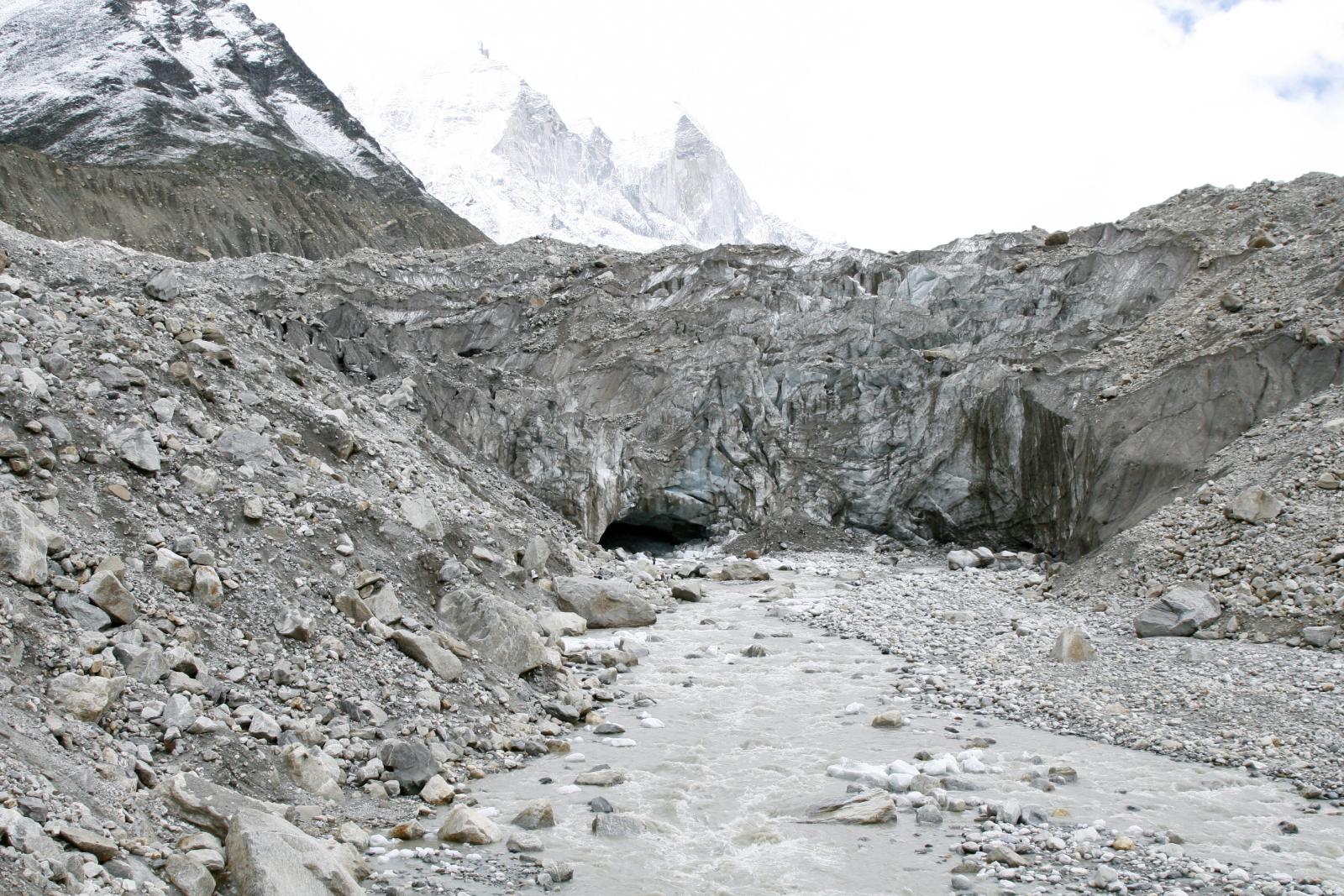
Gangotri is the temple town of the goddess Ganga at about 3,100 m on the Bhagirathi, one of the four Char Dham, reachable by road and open from Akshaya Tritiya to the day after Diwali. From here a permit-only trail runs 18 km to Gaumukh, the snout of the Gangotri Glacier. One night for the temple, three or four for Gaumukh.

Altitude
3,100 m
Best months
May – Jun · Sep – Oct
Nights
1–4
Position
30.99° N, 78.94° E
GangotriPhoto: gbSk at Flickr · CC BY 2.0 · Commons

Gangotri is a small town of ashrams, dharamshalas and shops strung along the Bhagirathi where it pours through a granite gorge. At its heart stands the white temple of the goddess Ganga, first built by the Gorkha general Amar Singh Thapa during Nepal's occupation of Garhwal and restored in the nineteenth century. Near the river is the rock where King Bhagiratha is said to have meditated to bring the Ganga down to earth, which is why the river here bears his name.

The river does not technically become the Ganga until it meets the Alaknanda at Devprayag, but for pilgrims Gangotri is its source and its seat. Families come to bathe in the icy water, to perform rites for ancestors on the ghats and to carry home sealed cans of Gangajal. The temple is open from Akshaya Tritiya in late April or May until Govardhan Puja after Diwali, when the goddess is carried down to Mukhba near Harsil for the winter.

Gangotri is also the gate to Gangotri National Park. The trail to Gaumukh, the glacier snout at about 4,000 m, runs 18 km up the valley past Chirbasa and Bhojbasa, with Bhagirathi and Shivling peaks rising ahead. Entry is by permit with a daily cap, and a guide is required. Even if you do not trek, a night in Gangotri, with the evening aarti on the river and stars over the gorge, is one of the yatra's quiet rewards.

Say it like a local · Hindi / SanskritGaumukh
cow's mouth; the name of the Gangotri Glacier's snout, after the shape of its ice cave

What to do in Gangotri

Gangotri temple and aarti

The white temple of the goddess Ganga opens at dawn and holds an evening aarti on the riverbank as light leaves the gorge. Crowds are lighter than at Kedarnath and Badrinath, and darshan rarely takes more than an hour outside the opening weeks.

Bhagiratha's rock

Beside the temple, a flat rock by the river marks where King Bhagiratha is believed to have performed penance to bring the Ganga to earth for his ancestors. Pilgrims offer flowers here and perform rites on the ghats nearby.

The Gaumukh trail

An 18 km trail from Gangotri to the snout of the Gangotri Glacier, via Chirbasa and Bhojbasa, with views of the Bhagirathi peaks and Shivling. Permits, a daily cap of 150 trekkers and a mandatory guide apply; check current status before you travel.

Surya Kund falls

A few minutes from the temple, the Bhagirathi crashes into a narrow, polished granite chasm at Surya Kund. A footbridge gives a view straight down into the gorge. Hold children's hands; the rocks are smooth and wet.

Pandav Gufa walk

A gentle 1.5 km riverside path through deodar from Gangotri to Pandav Gufa, a cave where the Pandavas are said to have meditated. Good for a first acclimatisation walk on arrival.

Field notes

What most guides miss about Gangotri

Sourced

The original Gangotri temple was built by the Nepalese general Amar Singh Thapa, during the Gorkha occupation of Garhwal, and restored later in the nineteenth century. Its rituals are supervised by the Semwal family of priests from Mukhba village.

Source: Gangotri

Sourced

The first recorded European visit to Gaumukh was made by John Hodgson and James Herbert on 31 May 1817. In 1937 the geologist J. B. Auden published the first scientific map of the Gangotri Glacier and its snout.

Source: Gomukh

Sourced

Gangotri National Park, created in 1989, covers about 1,553 km² of the upper Bhagirathi and links Govind National Park with Kedarnath Wildlife Sanctuary. Snow leopard, blue sheep, Himalayan tahr and musk deer live within it.

Source: Gangotri National Park

Real prices

What things cost in Gangotri

ItemIndicative 2026
UTC or GMOU bus, Uttarkashi to Gangotri₹200–350
Gaumukh permit (Indians / foreigners)≈ ₹150 / ₹600 per person
Registered guide for Gaumukh, per day₹1,500–3,000
GMVN or ashram dorm bed in Gangotri₹300–800 a night
Double room in a Gangotri lodge, peak₹1,500–4,000
Thali at a Gangotri dhaba₹150–250

Local prices change with season and fuel costs. Check current status before you travel.

Getting there

How to reach Gangotri

Bus

UTC and GMOU buses run from Rishikesh and Dehradun to Uttarkashi, about 6 hours, and some go on to Gangotri, about 250 km and 9–10 hours in all. Shared jeeps link Uttarkashi and Gangotri in season.

Road

By car from Rishikesh, take the route via Chamba, Dharasu, Uttarkashi and Harsil, about 250 km and 9–10 hours. The road beyond Gangnani has slide zones; drive in daylight and check current status before you travel.

Air

Dehradun's Jolly Grant airport is the nearest commercial airport. Helicopter Char Dham charters land at Harsil for Gangotri; seats are costly and weather-dependent.

Where to stay

Sleeping in Gangotri

Saver: GMVN runs a tourist rest house in Gangotri, and ashrams and dharamshalas near the temple offer dorm beds and simple rooms at ₹300–1,500. Comfort: Gangotri's private lodges are basic; for warmer, quieter rooms we book Harsil, 25 km below, and drive up for darshan. On the Gaumukh trail, GMVN and ashram accommodation at Bhojbasa is simple and must be arranged in advance. There is no luxury hotel in this valley.

Map of Gangotri, Harsil, Yamunotri, KedarnathIndiaChinaNepalGangotri1GangotriHarsil2HarsilYamunotri3YamunotriKedarnath4Kedarnath50 kmN
  1. 1Gangotri
  2. 2Harsil
  3. 3Yamunotri
  4. 4Kedarnath
Drawn by Himalaya Hives from Natural Earth outlines (public domain). Borders as depicted by India. Not for navigation.

Questions

Gangotri, answered

How do I reach Gangotri from Rishikesh?

By bus, take a UTC or GMOU bus to Uttarkashi (6 hours, ₹300–450) and another bus or shared jeep to Gangotri (4 hours, ₹200–350). By car, it is about 250 km and 9–10 hours via Chamba, Uttarkashi and Harsil. Start early and avoid driving after dark.

Is Gangotri reachable by road?

Yes. Unlike Kedarnath and Yamunotri, Gangotri temple is a short walk from the road head, which makes it the easiest of the four dhams for seniors. The road can close after landslides in monsoon; check current status before you travel.

When is the best time to visit Gangotri?

May to June and mid-September to October. The temple opens around late April or May and closes after Diwali. July and August bring heavy rain and road blockages. October has the clearest skies and fewest crowds.

How many days do I need for Gangotri?

One night is enough for darshan, the aarti and Surya Kund. For the Gaumukh trek, add 3–4 nights, including a night at Harsil or Gangotri to acclimatise before starting.

Is there mobile network and ATM in Gangotri?

BSNL and Jio usually work in Gangotri town, though weakly. There is no reliable ATM; draw cash in Uttarkashi. On the Gaumukh trail there is no network beyond the first few kilometres.

Do I need a permit for Gangotri?

No separate permit is needed for Gangotri town and temple, but Char Dham registration is mandatory. Gaumukh and treks beyond need a Gangotri National Park permit. Check current status before you travel.

Can I combine Gangotri and Yamunotri?

Yes. Most Char Dham itineraries do Yamunotri first, then cross to Uttarkashi for Gangotri. Barkot to Uttarkashi is about 100 km and 4 hours. A two-dham trip of Yamunotri and Gangotri takes 5–6 nights from Rishikesh.

Is Gangotri safe for solo women?

Yes. It is a pilgrim town with families, ashrams and police presence in season. Stay in GMVN or ashram accommodation, walk in daylight and share plans with someone. On the Gaumukh trail, the required guide adds another layer of safety.

Will I feel the altitude at Gangotri?

At about 3,100 m, many people feel short of breath on steps and sleep poorly on the first night, especially after a long drive from the plains. Breaking the journey at Uttarkashi or Harsil helps. Drink water, avoid alcohol and talk to your doctor about precautions.

Plan with a local planner

Plan Gangotri into your trip

We reply within one working day with a route, a sleeping-altitude profile and an itemised price in your tier. Change anything. Pay nothing until you are sure.

No payment to start
Written, itemised quote
One planner, on WhatsApp
Altitude-safe pacing

Start with four details

Within one working day. No payment to start.

We reply by email or WhatsApp. See our privacy policy.

Plan Gangotri