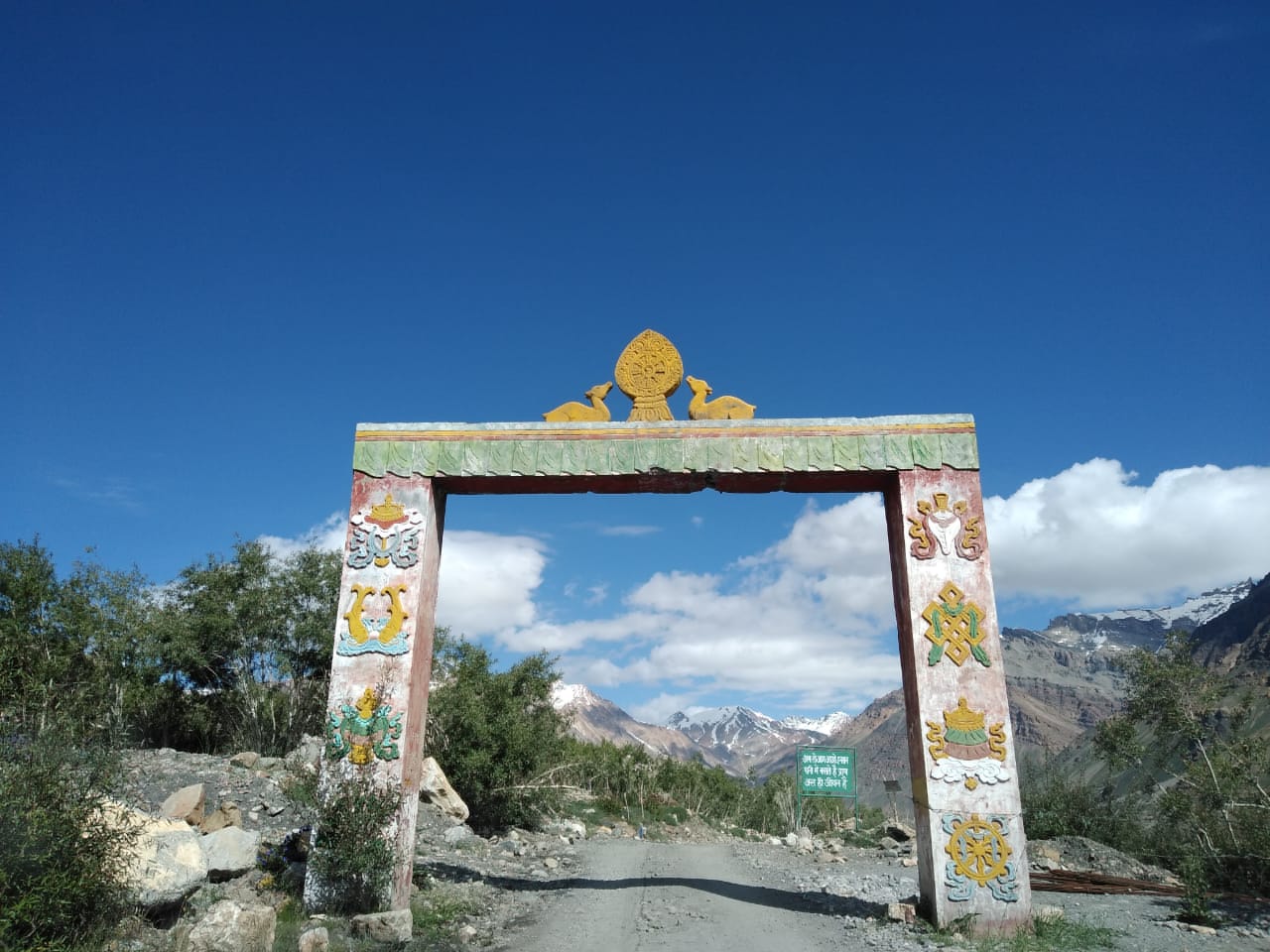
Spiti means the middle land, the valley between Tibet and India, and it still feels like a place in between. The Spiti river runs from below Kunzum La to its meeting with the Sutlej in Kinnaur, through a cold desert where about 50 mm of rain falls in a year. Villages sit where a side stream makes irrigation possible: green squares of barley and peas around whitewashed houses with flat roofs stacked with firewood and dung cakes. Above them, on ridges, are the gompas that have anchored this valley since the 10th century.
Lahaul is the other half of the district, west of Kunzum La. It gets more snow and more water, so its villages grow potatoes, peas and hops, and willow and poplar line the Chandra and Bhaga rivers. Keylong, the district headquarters, sits at 3,080 m on the Manali–Leh road. Since the Atal Tunnel opened on 3 October 2020, Lahaul has become a two-hour drive from Manali and is reachable for much of the winter.
For travellers this is the most affordable high Himalaya in India. HRTC buses run to Kaza from both Shimla and Manali, shared taxis fill up each morning in season, and a family homestay with dinner and breakfast costs ₹1,200–2,500 a person. There are no five-star hotels, and we say that plainly: the best rooms in Spiti are good, warm, locally built boutique hotels and heated homestay rooms, not resorts.
Altitude is the one thing to plan around. Kaza is at 3,650 m, Key Gompa at 4,166 m, and Langza, Hikkim and Komic sleep at 4,400 m or more. Enter from the Shimla side through Kinnaur if you can, because the gradual climb through Nako and Tabo is the safest acclimatisation on any Himalayan road trip. Coming from Manali, take an easy first day in Kaza and talk to your doctor before you go.