Himalaya only · Saver trips from ₹7,500

Himalaya HivesKashmir to Arunachal

India · Dal Lake blue and chinar copper

Kashmir

Lake houses, saffron karewas and shepherd meadows

Kashmir is a 135 km long valley at about 1,600 m, ringed by the Pir Panjal and the Great Himalaya. Come April to June for tulips and meadows, September to November for chinar and saffron, January to March for snow in Gulmarg. Six to eight nights covers Srinagar, Gulmarg, Pahalgam and Sonamarg.

Best months
Apr – Jun · Sep – Oct
Altitude
1,580–2,730 m
Saver from
₹12,500
Signature from
₹1,45,000
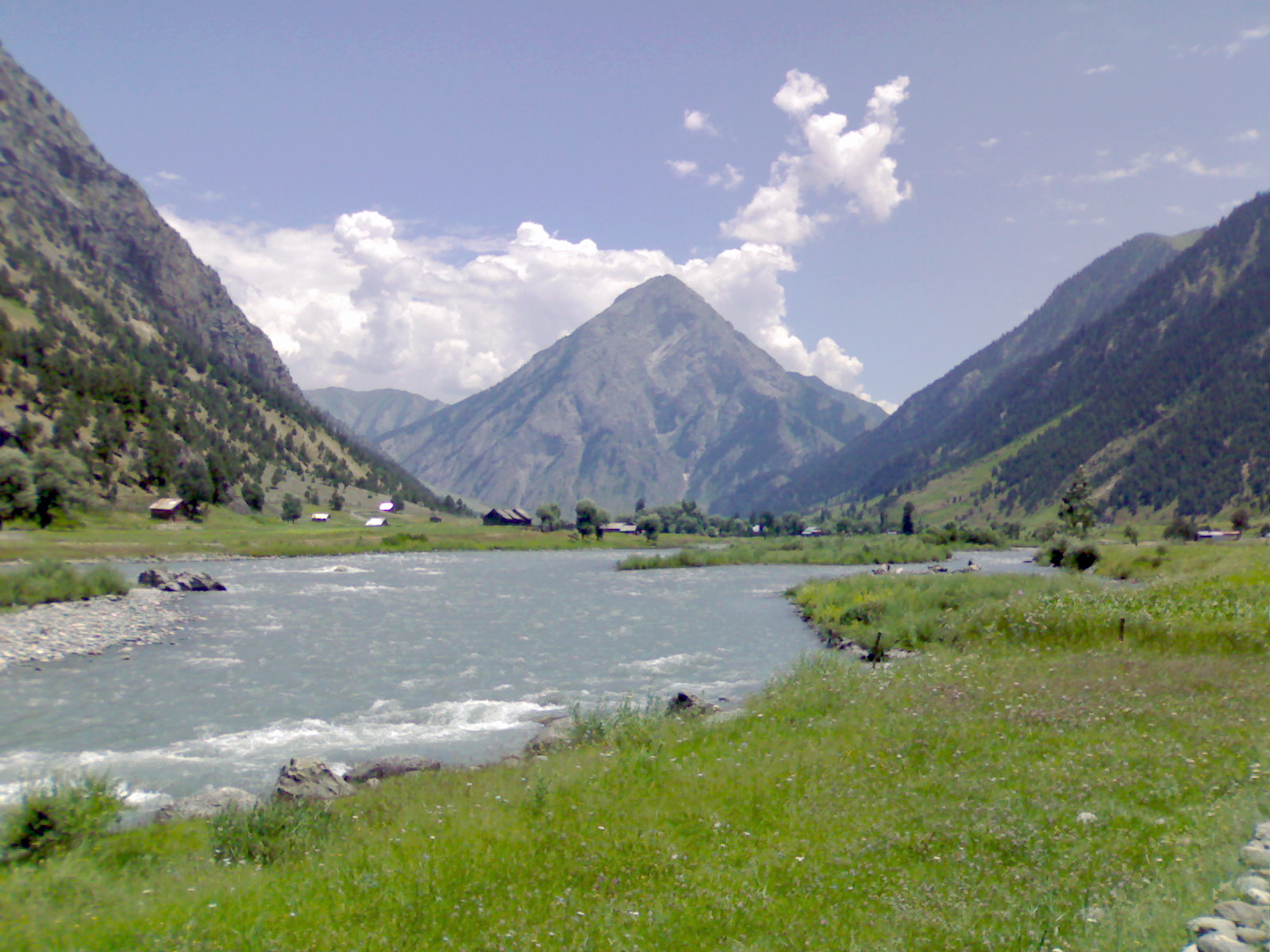
KashmirPhoto: Fulvio Spada from Torino, Italy · CC BY-SA 2.0 · Commons

We call Kashmir the hive that was once a lake. The valley floor sits at roughly 1,600 m, flat as a tabletop, with the Jhelum winding through it and the Pir Panjal walling it to the south and west. Srinagar spreads around Dal Lake, where families still live and farm on the water. Around the rim, side valleys climb to meadows the Kashmiris call marg: Gulmarg, Sonamarg, Yusmarg. Each one is a day trip from the city, and each has its own season.

Most visitors rush the classic loop of Srinagar, Gulmarg and Pahalgam in five days. That works, but the valley rewards slower travel. Stay a night on a houseboat and you will hear the dawn vegetable market on the lake. Walk the Mughal gardens in October and the chinar leaves turn copper. Drive to Pampore in late October and the karewa plateaus are purple with saffron crocus. Cross the Razdan Pass to Gurez and you meet Shina-speaking villages in log houses below a pyramid peak named after a poet-queen.

Kashmir is also one of the easiest Himalayan regions to do on a budget. Shared Sumos link Srinagar with every valley for a few hundred rupees a seat, JKTDC runs government huts in Pahalgam, Sonamarg, Gulmarg, Yusmarg, Doodhpathri and Gurez, and houseboats on Dal and Nigeen offer simple rooms at guesthouse prices. Food is cheap and filling: noon chai and girda bread for breakfast, rajma and rice at roadside dhabas, a wazwan dinner when you want to splurge.

A practical note. Kashmir sees periodic security advisories, road closures and strikes, and some meadows have been closed to visitors at times. None of this is a reason to skip the valley, but plan with buffer days and check current advisories before you travel. Prepaid SIMs from outside Jammu and Kashmir generally do not work here; postpaid connections do. Carry photo ID everywhere, and expect police and army checkposts on roads to Gurez and other border areas.

Satisar, the drained lake

Kashmiri tradition, recorded in the Nilamata Purana, says the valley was once a great lake called Satisar, drained by the sage Kashyapa so people could settle. Geologists tell a parallel story. The flat-topped plateaus that rise above the valley floor, called karewas, are layers of old lake sediment laid down when the Jhelum basin was dammed. Those karewas matter to travellers today, because their well-drained soil is where Kashmir grows its saffron and almonds. Drive south from Srinagar to Pampore and you climb onto one. In late October the karewa at Pampore turns purple with crocus flowers, and families pick them at dawn before the petals open fully.

Gardens built around water

The Mughal emperor Jahangir and his wife Nur Jahan moved their court to Kashmir for the summer at least 13 times. In 1619 Jahangir laid out Shalimar Bagh on the north-east shore of Dal Lake, fed by a central channel, the Shah Nahar, running down three terraces. In 1633 Nur Jahan's brother Asif Khan built Nishat Bagh nearby with twelve terraces. The engineering is the point: mountain springs and streams were led through stone channels, chutes and fountain basins purely by gravity. Shade came from chinar trees, the oriental plane, which tradition says reached Kashmir with Persian preachers in the 14th century. Today every chinar is registered as state property.

Wood, wool and painted paper

Srinagar's old city is a working museum of craft. The Khanqah-e-Moula, first built in 1395 on the Jhelum bank to honour the Persian preacher Mir Sayyid Ali Hamadani, is a wooden shrine with papier-mache interiors. The Jamia Masjid at Nowhatta, begun in 1394, rests on 378 deodar columns. In the lanes around them, artisans still carve walnut wood, paint papier-mache boxes, embroider sozni shawls and weave carpets knot by knot. European demand for Kashmir shawls in the 19th century made the craft famous worldwide. In November 2021 UNESCO named Srinagar a Creative City for crafts and folk art, the second Indian city in that category after Jaipur.

The herders' calendar

Long before tourists, the high meadows belonged to herders. Pahalgam means village of the shepherds in Kashmiri. Every spring Gujjar and Bakarwal families, listed as a Scheduled Tribe since 1991, drive goats, sheep and buffalo from the Jammu plains over the Pir Panjal and Banihal passes to summer pastures around Pahalgam, Sonamarg, Doodhpathri and Gurez, and walk back down before the snow. You will meet them on the road in May and October, and see their mud and timber huts in the meadows all summer. Gulmarg itself was renamed from Gaurimarg by Sultan Yousuf Shah Chak, husband of the poet Habba Khatoon, in the 16th century.

Why go

Six reasons Kashmir is worth the climb

Sleep on Dal Lake

Houseboats exist because the Dogra rulers did not allow outsiders to own land, so British visitors built floating homes instead. Today budget boats on the inner Dal and Nigeen cost about the same as a guesthouse. Wake at 5 am and take a shikara to the floating vegetable market.

Walk the Mughal gardens

Shalimar (1619), Nishat (1633), Chashme Shahi and Pari Mahal line the Zabarwan foothills above Dal Lake. Go early on a weekday, follow the water channels uphill terrace by terrace, and come back in October when the chinar trees turn red and copper.

Ride to Apharwat

The Gulmarg Gondola climbs in two phases from the meadow at 2,650 m to Kongdori and then close to 4,000 m on Apharwat. Book slots online, go early before cloud builds, and carry a warm layer even in June. In winter the upper bowls are a serious ski terrain.

Follow the Lidder upstream

From Pahalgam the East and West Lidder rivers lead to Chandanwari, Betaab Valley and Aru. Aru, 12 km up, is the start of treks to the Kolahoi Glacier and the Tarsar and Marsar lakes. Local union taxis run the valley circuits at fixed rates.

Saffron on the karewas

Kashmir saffron, grown mainly on the Pampore karewas 15 km from Srinagar, received a Geographical Indication tag in May 2020. Visit from late October to mid November to see the crocus flowers picked at dawn, then buy directly from growers or the trading centre at Dussu.

Cross into Gurez

A 123 km road from Srinagar climbs over the Razdan Pass to the Kishanganga valley, where Shina-speaking villages of log houses sit below the pyramid-shaped Habba Khatoon peak. The pass is snowbound for about half the year, so go between June and October.

Inside the hive

Where to go in Kashmir

Ordered by how many of our trips stop there, with the altitude you sleep at.

SrinagarPhoto: Fulvio Spada from Torino, Italy · CC BY-SA 2.0 · Commons
1,585 m · City · Kashmir

Srinagar

Houseboats, Mughal gardens and an old city of craftsmen

Best Apr – Jun · Sep – Oct2–4 nights
PahalgamPhoto: Unknown author · CC0 · Commons
2,200 m · Town · Kashmir

Pahalgam

The shepherds' village where the two Lidder rivers meet

Best Apr – Jun · Sep – Oct2–3 nights
GulmargPhoto: Skywayman9 · CC BY-SA 3.0 · Commons
2,650 m · Hill station · Kashmir

Gulmarg

A ski meadow at 2,650 m with a gondola to Apharwat

Best May – Jun · Sep · Dec – Mar1–2 nights
Aru ValleyPhoto: KennyOMG · CC BY-SA 4.0 · Commons
2,414 m · Valley · Kashmir

Aru Valley

Trailhead village for Lidderwat, Kolahoi and Tarsar

Best May – Oct1–2 nights
Gurez ValleyPhoto: Aniketchoudhary87 · CC BY-SA 4.0 · Commons
2,400 m · Valley · Kashmir

Gurez Valley

Log villages on the Kishanganga below Habba Khatoon peak

Best Jun – Oct2–3 nights
Dachigam National ParkPhoto: Nadeem Hassan · CC BY-SA 3.0 · Commons
1,700 m · National park · Kashmir

Dachigam National Park

Home of the hangul, 22 km from Srinagar

Best Apr – May · Sep – Nov0 nights
DoodhpathriPhoto: Ankur P from Pune, India · CC BY-SA 2.0 · Commons
2,730 m · Valley · Kashmir

Doodhpathri

The valley of milk, 42 km from Srinagar

Best May – Jun · Sep – Oct0–1 nights
PamporePhoto: Umarsami · CC BY-SA 4.0 · Commons
1,580 m · Town · Kashmir

Pampore

Saffron town on the karewas, 15 km from Srinagar

Best Oct – Nov0 nights
SonamargPhoto: Wikiditot · CC BY-SA 4.0 · Commons
2,730 m · Valley · Kashmir

Sonamarg

The meadow of gold on the old road to Ladakh

Best May – Jun · Sep – Oct1 nights
YusmargPhoto: Suhail Skindar Sofi · CC BY-SA 4.0 · Commons
2,396 m · Hill station · Kashmir

Yusmarg

Pine meadows on the Doodh Ganga, a walk from Nilnag lake

Best May – Jun · Sep – Oct0–1 nights

Trips

Kashmir trips in three tiers

Photo: Fulvio Spada from Torino, Italy · CC BY-SA 2.0 · Commons Saver
Kashmir · 5 nights · sleeps to 2,650 m

Srinagar, Gulmarg and Pahalgam on a budget

Shared Sumos, the valley train and a shared union taxi in Pahalgam

From, per person₹12,500Apr – Jun · Sep – Oct
Photo: Fulvio Spada from Torino, Italy · CC BY-SA 2.0 · Commons Saver
Kashmir · 6 nights · sleeps to 2,400 m

Gurez Valley on a budget by shared Sumo

JKSRTC or private bus to Bandipora, shared Sumos, one shared car day

From, per person₹14,500Jun – Oct
Photo: Fulvio Spada from Torino, Italy · CC BY-SA 2.0 · Commons Comfort
Kashmir · 6 nights · sleeps to 2,730 m

Kashmir in autumn: saffron, chinars and Aru

Private car with driver

From, per person₹39,000Oct – Nov
Photo: Fulvio Spada from Torino, Italy · CC BY-SA 2.0 · Commons Comfort
Kashmir · 7 nights · sleeps to 2,730 m

Classic Kashmir: Srinagar, Gulmarg, Pahalgam

Private car with driver

From, per person₹54,000Apr – Jun · Sep – Oct
Photo: Fulvio Spada from Torino, Italy · CC BY-SA 2.0 · Commons Signature
Kashmir · 7 nights · sleeps to 2,650 m

Signature Kashmir: palace, meadow and river

Private car with driver and a private guide

From, per person₹1,45,000Apr – Jun · Sep – Oct
Photo: Fulvio Spada from Torino, Italy · CC BY-SA 2.0 · Commons Signature
Kashmir · 6 nights · sleeps to 2,650 m

Kashmir in winter: Gulmarg snow and Srinagar

Private 4x4 with driver and snow chains

From, per person₹1,65,000Jan – Feb

What it costs

A day in Kashmir, three ways

Per person per day, indicative 2026, once you are in the hive.

Kashmir on a budget
Saver

Per person, per day₹2,500–4,000

Houseboat budget room, JKTDC hut or hostel bed, dhaba meals, shared Sumos and JKSRTC buses

Comfort

Per person, per day₹7,000–12,000

Good 3–4 star hotel or deluxe houseboat with meals, private car with driver, entry fees

Signature

Per person, per day₹20,000–45,000

Palace or top resort rooms, private car and guide, gondola, wazwan dinners, private shikara

Six ways to spend less in Kashmir

  • Use shared Sumos from Srinagar's taxi stands to Tangmarg, Pahalgam and Sonamarg for a few hundred rupees a seat instead of a full-day cab.
  • Book JKTDC huts and hotels directly on jktdc.co.in, where government rates in Pahalgam, Sonamarg, Yusmarg and Gurez undercut private resorts.
  • Negotiate houseboat rooms on Nigeen or the inner Dal in person in October, November and March, when rates often fall by a third or more.
  • Buy Gulmarg Gondola tickets online for the time slot you want; touts at the base charge extra for the same ticket.
  • Eat breakfast the Kashmiri way with nun chai and girda or lavasa bread from a neighbourhood kandur bakery for under ₹100.
  • Take the Katra–Srinagar Vande Bharat train (about 3 hours, chair car about ₹700–800) instead of a 9-hour taxi from Jammu.

Say it like a local

Eight words for Kashmir

KashmiriKahwa
green tea brewed with saffron, cardamom, cinnamon and almonds, often in a samovar
KashmiriNun chai
pink salt tea with milk and a pinch of soda, drunk with breakfast bread
KashmiriWazwan
the multi-course feast of mostly mutton dishes served at weddings and celebrations
KashmiriWaza
the master cook who prepares a wazwan
KashmiriTrami
large copper platter from which four guests share a wazwan
KashmiriPheran
long loose woollen gown worn through the winter
KashmiriKangri
wicker-wrapped clay pot of embers carried under the pheran for warmth
KashmiriShikara
the long, paddled wooden boat used as a water taxi on Dal and Nigeen lakes

Field notes

Things few people tell you about Kashmir

All Kashmir notes
Sourced Aru Valley · 2,414 m

Aru lies on the left bank of the Aru stream, a tributary of the Lidder, and serves as the base camp for treks to the Kolahoi Glacier, Tarsar Lake, Marsar and Lidderwat.

Source: Aru, Jammu and Kashmir

Sourced Aru Valley · 2,414 m

There are about 20 alpine lakes, peaks and meadows within reach of the Aru valley, and in winter, when Aru gets heavy snow, skiing and heliskiing have been practised.

Source: Aru, Jammu and Kashmir

Sourced Aru Valley · 2,414 m

The Bakarwal and Gujjar herders who camp around Aru speak dialects of Gojri, have been listed as a Scheduled Tribe since 1991, and cross the Pir Panjal passes on their seasonal migrations.

Source: Bakarwal

Sourced Dachigam National Park · 1,700 m

Dachigam means ten villages, remembering the settlements relocated to create the reserve. The area has been protected since 1910 and became a national park in 1981.

Source: Dachigam National Park

Sourced Dachigam National Park · 1,700 m

The Dagwan river flows from Marsar lake inside the park and feeds the Sarband reservoir, a source of Srinagar's drinking water, which was one reason the catchment was protected.

Source: Dachigam National Park

Sourced Dachigam National Park · 1,700 m

Dachigam covers about 141 sq km and spans altitudes from about 1,676 m to 4,267 m, with forests, alpine pastures and steep gullies called nars.

Source: Dachigam National Park

Map of Aru Valley, Dachigam National Park, Doodhpathri, Gulmarg, Gurez Valley, Pahalgam, Pampore, Sonamarg, Srinagar, YusmargIndiaChinaAfghanistanPakistanAru Valley1Dachigam National Park2Doodhpathri3Gulmarg4Gurez Valley5Pahalgam6Pampore7Sonamarg8Srinagar9Yusmarg1050 kmN
  1. 1Aru Valley
  2. 2Dachigam National Park
  3. 3Doodhpathri
  4. 4Gulmarg
  5. 5Gurez Valley
  6. 6Pahalgam
  7. 7Pampore
  8. 8Sonamarg
  9. 9Srinagar
  10. 10Yusmarg
Drawn by Himalaya Hives from Natural Earth outlines (public domain). Borders as depicted by India. Not for navigation.

Experiences

Days worth planning around

Photo: Mike Prince from Bangalore, India · CC BY 2.0 · Commons
Aru Valley · 7–8 hours return

Aru to Lidderwat along the stream

A long but steady walk of about 10 km each way leads from Aru village through fir forest and meadow to Lidderwat, where…

Guide ₹1,500–2,500; pony ₹1,200–2,000 optional
Photo: Jyoti Chaurasia · CC BY-SA 4.0 · Commons
Dachigam National Park · 3–4 hours

Morning wildlife walk in lower Dachigam

Lower Dachigam is a broad, gentle valley floor of forest, orchards and meadow along the Dagwan. A guided morning walk o…

Permit (nil or nominal); guide ₹1,000–2,500
Photo: Ankur P from Pune, India · CC BY-SA 2.0 · Commons
Doodhpathri · 3–4 hours

Riverbank and meadow walk on the Shaliganga

Walk along the Shaliganga from the main meadow, cross on log bridges, and climb gently to open grassland with views of …

Free; taxi from Srinagar ₹2,500–3,500
Photo: Arup1981 · CC BY-SA 4.0 · Commons
Gulmarg · 3–5 hours

Gondola to the Apharwat ridge

The Gulmarg Gondola climbs in two phases from the meadow to Kongdori and then to the Apharwat ridge close to 4,000 m. I…

About ₹900 per phase for Indian adults (2025); foreigners pay m…
Photo: Zahid samoon · CC BY 3.0 · Commons
Gurez Valley · 3 hours

Walk Dawar's log-house villages

A slow walk through Dawar and the villages along the Kishanganga shows how Gurez lives: log houses built for long winte…

Free; local guide ₹1,000–1,500
Photo: Nandanupadhyay · CC BY-SA 3.0 · Commons
Pahalgam · 4–5 hours

Betaab Valley and Chandanwari by union taxi

Follow the East Lidder upstream from Pahalgam to Betaab Valley and the roadhead at Chandanwari, the start of the Amarna…

Union taxi ₹1,500–2,500 for this leg; park entry fee at Betaab
Photo: Ashfaq ahanger · CC BY-SA 4.0 · Commons
Pampore · 2–3 hours

Saffron harvest at dawn on the karewas

For about three weeks each autumn, Pampore's karewas turn purple with saffron crocus. Families pick the flowers at dawn…

Free to view from roadsides; guide ₹1,000–2,000
Photo: Original: Ganesh Mohan T Derivative work: Unpe… · CC BY 4.0 · Commons
Sonamarg · 3–4 hours

Walk or ride to the Thajiwas glacier valley

From the main Sonamarg meadow, a 3–4 km trail climbs gently into the Thajiwas side valley, ringed by peaks with glacier…

Free on foot; pony ₹800–1,500 return

Where to sleep

Homestays to the best lodges

All stays
Photo: McKay Savage · CC BY 2.0 · Commons Budget
Hostel · Srinagar

Zostel Srinagar

A backpacker hostel in the Nishat area, a short walk from the eastern shore of Dal Lake, with dorm beds, private r…

₹600–1,200 for a dorm bed; ₹2,000–4,000 for a private doubl…
Photo: Unknown author · CC0 · Commons Budget
Government tourist bungalow · Pahalgam

JKTDC Huts and Cottages, Pahalgam

The Jammu and Kashmir Tourism Development Corporation runs cottages and huts in Pahalgam, set among pines near the…

₹2,800–10,000 a night for a cottage unit (indicative)
Photo: Aniketchoudhary87 · CC BY-SA 4.0 · Commons Budget
Government tourist bungalow · Gurez Valley

JKTDC Tourist Bungalow and Huts, Dawar

JKTDC's accommodation at Dawar, the main township of Gurez, includes a tourist bungalow with rooms and log huts ne…

₹1,500–4,000 a night for a room or hut (indicative)
Photo: GharWapsi · CC0 · Commons Mid
Boutique hotel · Srinagar

Ahdoos Hotel

A long-established city hotel on Residency Road in central Srinagar, best known for its restaurant, one of the val…

₹4,500–8,000 a night for a double (indicative)
Photo: Chongkian · CC BY-SA 4.0 · Commons Mid
Heritage hotel · Gulmarg

Hotel Highlands Park

A heritage hotel from the early 1960s on a rise above the Gulmarg meadow, with a main lodge and separate cottage-s…

₹9,000–18,000 a night for a double (indicative)
Photo: Suneeta3 · CC BY-SA 4.0 · Commons Mid
Heritage hotel · Pahalgam

The Pahalgam Hotel

One of Pahalgam's oldest hotels, established in the early 1930s, set in gardens above the Lidder with rooms and su…

₹8,000–16,000 a night for a double (indicative)
Photo: Vinayaraj · CC BY-SA 4.0 · Commons Luxury
Heritage hotel · Srinagar

The LaLiT Grand Palace Srinagar

The former Gulab Bhavan, a summer palace completed in 1910 for Maharaja Pratap Singh, set in large lawns with chin…

₹18,000–45,000 a night for a double (indicative)
Photo: Skywayman9 · CC BY-SA 3.0 · Commons Luxury
Resort · Gulmarg

The Khyber Himalayan Resort & Spa

Gulmarg's top resort, opened in December 2012, with rooms and private cottages looking over the meadow and pine fo…

₹28,000–70,000 a night for a double (indicative)
Photo: Unknown author · CC0 · Commons Luxury
Resort · Pahalgam

Welcomhotel by ITC Hotels, Pine N Peak, Pahalgam

A five-star hotel in Pahalgam on the Aru road side of town, run under ITC's Welcomhotel brand, with around 68 room…

₹16,000–35,000 a night for a double (indicative)

Questions

Kashmir, answered

Is Kashmir safe for tourists right now?

Millions of domestic tourists visit Kashmir each year and the main circuits of Srinagar, Gulmarg, Pahalgam and Sonamarg are heavily used. Security situations can change quickly, though, and some meadows and roads have been closed to visitors at times. Check current advisories before you travel, register with your hotel, carry photo ID, follow local police instructions, and keep a buffer day in case of strikes or road closures.

What is the best time to visit Kashmir?

April to June for tulips, green meadows and open roads; September to November for clear skies, chinar colours and the saffron harvest; January to March for snow and skiing in Gulmarg. July and August are fine for treks and Gurez but busy on the Amarnath Yatra routes through Pahalgam and Sonamarg. December and January are very cold but beautiful.

How many days do I need for Kashmir?

Six to eight nights is ideal: three in Srinagar including a houseboat night, one or two in Gulmarg, and two or three in Pahalgam, with a Sonamarg day trip. Five nights is the minimum for the classic loop. Add three nights for Gurez, and four to seven for a trek such as Tarsar Marsar or the Great Lakes.

How much does a Kashmir trip cost per person?

On a saver budget with houseboat rooms, JKTDC huts and shared Sumos, plan ₹2,500–4,000 a day per person, so about ₹15,000–25,000 for six nights excluding travel to Srinagar. A comfort trip with a private car and good hotels runs ₹7,000–12,000 a day. Top hotels such as the Khyber and LaLiT push it to ₹20,000–45,000 a day.

Will my mobile SIM work in Kashmir?

Postpaid connections from any Indian operator work in Jammu and Kashmir. Prepaid SIMs issued outside J&K generally do not work, under a long-standing security rule. Buy a local prepaid SIM in Srinagar with your ID and a local reference, or use hotel Wi-Fi. Coverage is good in Srinagar and the main resorts, patchy in Gurez, and absent on high treks. Check current status before you travel.

Do I need a permit to visit Kashmir?

Indian citizens need no permit for the main valley. Gurez needs registration at checkposts with photo ID, and foreigners have needed prior permission from the Bandipora administration. Amarnath pilgrims must register with the Shrine Board and carry a health certificate. Dachigam needs a Wildlife Department permit. Foreign nationals should carry passports at all times. Check current status before you travel.

When does it snow in Kashmir?

Gulmarg usually gets reliable snow from mid-December to March, and the upper gondola slopes can hold snow into April. Srinagar sees a few snowfalls between late December and February. Pahalgam and Sonamarg are under snow from December to March. If you want guaranteed snow underfoot for a family trip, February in Gulmarg is the safest bet.

Should we stay on a houseboat or in a hotel?

Do both. One or two nights on a houseboat is a Srinagar experience you cannot get elsewhere: carved walnut interiors, a shikara at the door and the dawn market. Budget boats on Nigeen and the inner Dal cost ₹1,500–3,000 a room, deluxe boats far more. Hotels on the Boulevard or Rajbagh are easier for families with heavy luggage or limited mobility.

Can I reach Kashmir by train?

Yes. Since June 2025 Vande Bharat trains run from Shri Mata Vaishno Devi Katra to Srinagar in about 3 hours, and local trains link Banihal, Anantnag, Pampore, Srinagar and Baramulla. Reach Katra by train from Delhi and other cities, then change. Book early in season, and check current timetables and through-train plans before you travel.

Plan with a local planner

Plan Kashmir with a local planner

We reply within one working day with a route, a sleeping-altitude profile and an itemised price in your tier. Change anything. Pay nothing until you are sure.

No payment to start
Written, itemised quote
One planner, on WhatsApp
Altitude-safe pacing

Start with four details

Within one working day. No payment to start.

We reply by email or WhatsApp. See our privacy policy.

Plan Kashmir