Bir Billing hosted the Paragliding World Cup in 2015, the first time the series was held in India. Billing's take-off, at about 2,400 m, faces south over the Kangra valley.
Source: Bir, Himachal Pradesh
Himalaya only · Saver trips from ₹7,500
Try "Spiti", "snow leopard", "Char Dham", "homestay", "Tiger's Nest"
Village in Himachal
Paragliding over tea gardens and Tibetan monasteries in Kangra
Bir is a village at about 1,500 m in the Kangra valley; Billing, 14 km up the road at about 2,400 m, is the paragliding take-off. Come October–November or March–May for flying. Tandem flights cost about ₹3,000–4,500. Stay two nights for the flight, Tibetan monasteries, tea gardens and Baijnath.
 Photo: Fredi Bach from Switzerland · CC BY 2.0 · Commons
Bir is two villages in one. The old Himachali village sits around its bazaar on the main road, with Kangri houses and fields of rice and wheat. Below it, the Tibetan colony grew up in the 1960s around Chowgan, with several monasteries, a Tibetan school and the craft and study centres that now draw long-stay students. Between them lie small tea gardens, part of the Kangra tea belt that has grown tea since the mid-19th century.
What made Bir famous is the air above it. Billing, a meadow at about 2,400 m on the ridge behind the village, faces south over the wide Kangra valley, and on most clear days from October to November and March to May thermals rise steadily off the slopes. Pilots launch from Billing and land in fields at Bir roughly 1,000 m lower. In 2015 Bir Billing hosted India's first Paragliding World Cup, and cross-country pilots now fly long distances along the Dhauladhar.
For most visitors the experience is a 15–30 minute tandem flight with a licensed pilot, followed by a slow day of cafés and monastery visits. Bir has become a backpacker base with hostels, yoga and meditation courses and a few good cafés, but it is still smaller and calmer than McLeodganj. Pair it with Dharamshala, 70 km west, or use it as a stop between Dharamshala and Manali.
A 15–30 minute flight from about 2,400 m down to the landing fields at Bir, with a licensed pilot and a GoPro option. Fly in the morning for calmer air. Typically ₹3,000–4,500 depending on flight length and season.
Several monasteries in and around Chowgan, including the large Sherab Ling complex near Bhattu, 10 km away. Walk the colony in the morning when monks and children are on the way to prayers and school.
Small family tea estates lie along the road between Bir and the colony. Kangra tea carries a Geographical Indication tag. Walk the rows in March–April or October and buy green or black tea direct.
A stone Shiva temple of 1204 in the north Indian Nagara style, 15 km from Bir, with fine carvings and an inscription recording its construction. Free entry and rarely crowded outside Shivratri.
Even without flying, drive or walk up to Billing for the view across the Kangra valley to the plains and the take-offs of the last pilots. Carry a jacket; it is much colder than Bir.
Bir's cafés and bakeries on the colony roads serve good coffee and Tibetan food. Many travellers stay longer for meditation, yoga or Buddhist philosophy courses.
Field notes
Bir Billing hosted the Paragliding World Cup in 2015, the first time the series was held in India. Billing's take-off, at about 2,400 m, faces south over the Kangra valley.
Source: Bir, Himachal Pradesh
Tea has been grown in the Kangra valley since the mid-19th century, and Kangra tea received a Geographical Indication tag in 2005. Production fell after the 1905 Kangra earthquake damaged many estates.
Source: Kangra tea
The Baijnath temple near Bir was built in 1204 by two local merchants, according to inscriptions on its walls, and has been in continuous worship since. It is dedicated to Shiva as Vaidyanath, the lord of physicians.
Source: Baijnath Temple
Experiences
 Photo: Fredi Bach from Switzerland · CC BY 2.0 · Commons
Drive up to the Billing take-off at about 2,400 m, run a few steps with your pilot and fly for 15–30 minutes over pine …
 Photo: Gannu03 · CC BY-SA 4.0 · Commons
A gentle walk through Bir's Tibetan colony at Chowgan, visiting monasteries, prayer wheels and stupas, then out through…
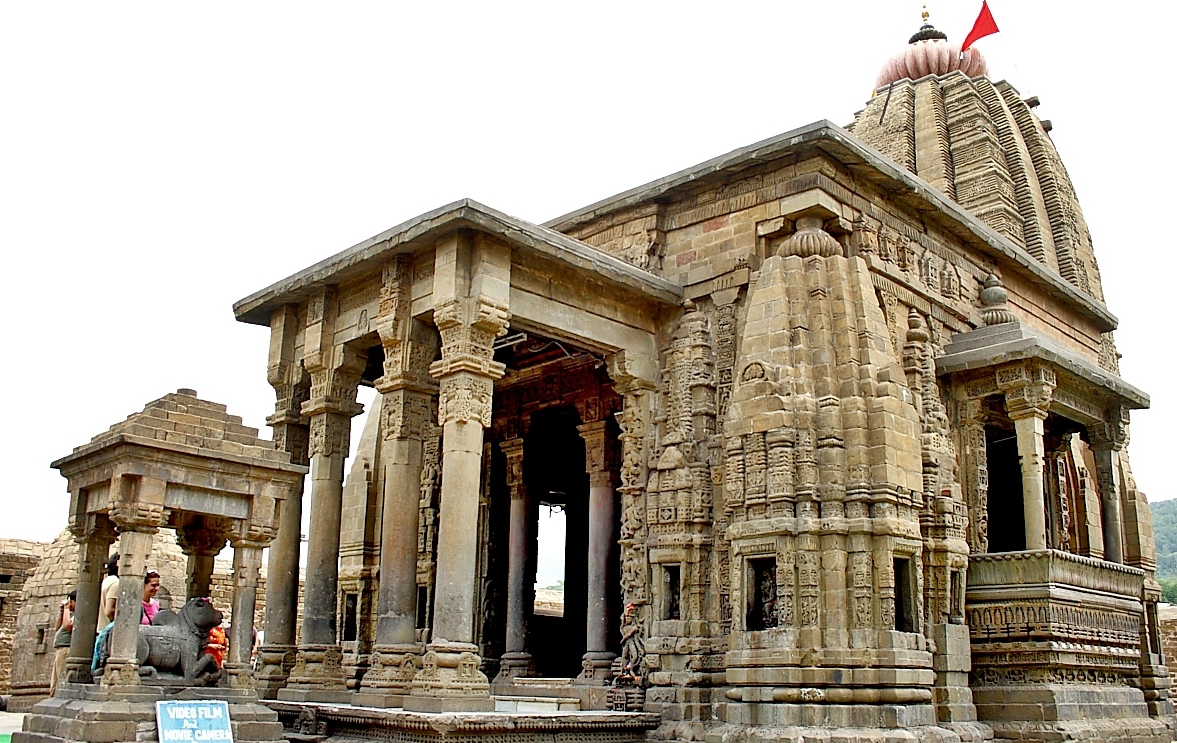 Photo: Rakeshkdogra · CC BY-SA 3.0 · Commons
Walk through Bir's small tea estates, buy Kangra green or black tea, then drive 15 km to the stone Baijnath temple, bui…
Real prices
Local prices change with season and fuel costs. Check current status before you travel.
Getting there
Air
Kangra airport at Gaggal is about 65 km and 2 hours away. Taxis cost roughly ₹2,500–3,500. Flights from Delhi are daily in good weather.
Bus
HRTC and private Volvos run overnight from Delhi to Baijnath or Bir Road, about 11–12 hours; take a local bus or taxi for the last 10–15 km. HRTC buses link Baijnath with Dharamshala (≈ 3 h), Palampur and Mandi.
Rail
The narrow-gauge Kangra Valley Railway from Pathankot stops at Ahju station, about 3 km from Bir. It is very slow and services are sometimes suspended, but it is a charming ride when running.
Road
From McLeodganj via Palampur and Baijnath, about 70 km and 2.5 hours. From Manali via Mandi and Joginder Nagar, about 210 km and 6–7 hours.
Where to stay
Saver: Bir has many hostels and simple guesthouses in the Tibetan colony and near the landing site, from about ₹500 for a dorm bed and ₹1,200–2,000 for a private double; Zostel runs a hostel here. Comfort: a handful of boutique cottages and mid-range hotels sit among the tea gardens and on the road towards Billing, mostly ₹3,500–7,000 a night. Signature: there is no luxury hotel in Bir itself; signature travellers usually stay in the Dharamshala or Palampur area and drive over for the flight.
Trips that stop here
 Photo: Ms Sarah Welch · CC0 · Commons
Comfort
Photo: Ms Sarah Welch · CC0 · Commons
Comfort
Private car with driver
Questions
October and November for the best flying weather and clear views, and March to May for spring. December to February is cold but often clear. Flying stops during the monsoon, usually from mid-July to mid-September, and heavy rain makes the area less pleasant.
A saver weekend from Delhi costs about ₹9,000–13,000 per person: overnight Volvo both ways, two nights in a hostel, food and one tandem flight. With a private car and boutique stay, expect ₹20,000–30,000 per person for two nights including the flight.
Take an overnight HRTC or private Volvo to Baijnath or Bir Road, about 11–12 hours, then a local bus or taxi for the last stretch. Alternatively fly to Kangra and take a taxi for about 2 hours. Trains run to Pathankot, about 140 km away.
Operators generally take adults and older children in good health, with a weight range roughly 30–100 kg depending on the pilot and wing. People with back, heart or neck problems, or who are pregnant, should not fly without medical advice. Always talk to your doctor if unsure.
Two nights is ideal: one morning for the flight, one day for the monasteries, tea gardens and Baijnath. If weather cancels flights, a spare day helps. Many travellers stay a week or more for meditation courses or to learn to fly solo.
Yes. Bir is a small, friendly village with many solo travellers and long-stay students, and hostels have women-only dorms. Use normal care walking the unlit lanes between the colony and the bazaar at night and arrange taxis through your hostel.
There are a few ATMs in Bir, and more in Baijnath, 15 km away. They can run out of cash on busy weekends. Jio and Airtel work well in Bir; signal is weaker at Billing. Many cafés and operators accept UPI.
Only if you hold a recognised pilot licence and register with the local authorities. Several schools in Bir run beginner courses of one to two weeks leading to basic certification. Tandem flights are the option for everyone else.
Yes. Distances are short, the monasteries and landing fields fascinate children, and the altitude is low. Children can fly tandem with some operators if they meet weight and age rules. Keep an eye on them near the busy landing site.
Plan with a local planner
We reply within one working day with a route, a sleeping-altitude profile and an itemised price in your tier. Change anything. Pay nothing until you are sure.